- Free Updates: Enjoy free upgrades to newer versions to stay ahead of the curve.
- Satisfaction Guaranteed: 30-day money-back guarantee if you’re not completely satisfied.
- Secure Transactions: Safe and secure payment gateways ensure your transactions are protected.
- Customizable Solutions: Tailored AI models to meet specific business needs.
- Instant Digital Delivery: Receive your AI model instantly via digital download.
- Unmatched AI Intelligence: Harness the most advanced GPT model tailored to revolutionize your business processes.
- Limited-Time Discounts: Enjoy savings of up to 73% on premium AI solutions.
- Proven Results: Trusted by leading professionals across multiple industries for enhancing efficiency.
- 24/7 Support: Our AI tools function as tireless virtual assistants, available round-the-clock.
- High Customer Satisfaction: Rated 5-stars by professionals from diverse fields for transforming workflows.
- Expert Guidance: Free consultation sessions to help you get the most out of your AI tool.
- Future-Ready Technology: Stay competitive with the latest AI advancements integrated into our models.
1. Product Title
Speculative Futures Architect v2.0
Premium Design Intelligence for Future-Facing Architectural Concept Development
2. Opening Statement
When ambitious architectural ideas deserve more than inspiration alone, Speculative Futures Architect v2.0 brings clarity, coherence, and elevated creative direction to the work.
3. Overview
Speculative Futures Architect v2.0 is a premium design intelligence system for shaping future-facing architectural concepts with greater depth, structure, and visual power.
It is built for users who want more than scattered ideas, generic futurist language, or surface-level prompt output. Instead, it helps turn early ambition into coherent concept direction. The result is work that feels more intentional, more immersive, and more professionally resolved.
At its core, v2.0 supports speculative architecture, future-environment development, worldbuilding-led design thinking, and image-ready concept articulation. It helps users move from instinct to direction, from mood to architecture, and from possibility to a more disciplined creative proposition.
Just as importantly, it does so without blurring the boundary between concept work and verified implementation. This is not positioned as engineering software, code analysis, or construction documentation. Rather, it is a high-value partner for concept development, design refinement, speculative intelligence, and premium creative presentation.
Whether the goal is a cinematic landmark, a plausible near-future district, a luxury off-world habitat, a symbolic civic environment, or a richly developed visualization prompt set, v2.0 helps the work feel more coherent from the inside out.
4. Who It’s For
Speculative Futures Architect v2.0 is designed for people whose ideas need to carry more weight, more refinement, and more design intelligence.
For architects and architectural designers
Ideal for those developing early-stage concepts, future typologies, competition visions, or design narratives that need stronger structure, material logic, and atmospheric coherence.
For concept artists and visualization creators
A strong fit for users who want architectural scenes to feel more convincing, more cinematic, and more spatially intelligent rather than merely stylized.
For urban designers and future-systems thinkers
Valuable for those exploring districts, infrastructures, civic futures, climate-adaptive environments, and large-scale world conditions that require both imagination and internal logic.
For developers, brand visionaries, and premium storytellers
Well suited to users who need future-facing concepts that communicate distinction, aspiration, and design value with greater polish.
For worldbuilders, filmmakers, and narrative creators
Especially useful for those building environments that must feel culturally grounded, emotionally compelling, and architecturally coherent across multiple layers of story.
For students, researchers, and advanced creative thinkers
An excellent companion for those who want sharper critique, stronger concept articulation, and more structured speculative thinking in their workflow.
5. Why Users Want It
Because strong ideas deserve strong development.
Many future-facing concepts begin with excitement, yet lose force as they move into language, refinement, and presentation. The vision may feel powerful in fragments, but still remain vague, visually inconsistent, or architecturally underdeveloped. Speculative Futures Architect v2.0 helps resolve that.
It gives users something highly valuable: a clearer path from imagination to articulation.
That means more confidence when shaping an idea. More control when refining it. More originality in the final concept direction. And more elegance in the way the work is communicated.
Users want it because it helps them think better, not just produce more. It helps them find a stronger center inside the concept, then build outward with greater coherence. As a result, the work often feels more premium, more complete, and more persuasive to others.
Professionally, it supports momentum. Creatively, it supports depth. Emotionally, it reduces the distance between what the user wants to express and what the work is actually able to communicate.
For ambitious designers and creators, that difference matters.
6. How It Improves the Work
Speculative Futures Architect v2.0 improves the work by giving ambitious ideas a more disciplined creative framework.
It sharpens design thinking
Instead of treating futurism as a visual shortcut, it helps users think through context, typology, atmosphere, systems, materiality, narrative, and user experience as connected parts of one concept.
It reduces conceptual drift
When ideas are exciting but unstructured, they often become inconsistent. v2.0 helps hold the design together, so the concept evolves with greater internal logic and less creative noise.
It accelerates refinement
Users can move from broad instinct to clearer direction faster. For example, a loose vision for a regenerative hospitality project can become a stronger concept package with defined spatial language, environmental logic, experiential tone, and visualization direction.
It improves presentation quality
The work becomes easier to explain, easier to pitch, and easier to visualize. Instead of generic language, users gain more specific, more elegant, and more image-ready concept framing.
It strengthens creative confidence
Because the output is more coherent and more polished, users are better positioned to iterate, present, and develop their ideas further.
In practice, this means better prompts, better critiques, better concept packages, and a stronger overall workflow.
7. Core Features & Capabilities
Structured speculative concept development
Shapes future-facing ideas into more coherent architectural directions by aligning world setting, program, atmosphere, design intent, and visual language.
Future-environment intelligence
Supports the development of speculative buildings, districts, interiors, habitats, and hybrid environments with stronger conceptual integration.
Architectural storytelling support
Helps connect narrative ambition to actual design moves, so atmosphere, symbolism, and cultural meaning are expressed through architecture rather than floating above it.
Visualization-ready prompt development
Generates clearer image-ready concept framing with stronger attention to materials, camera logic, lighting, mood, scale cues, and scene composition.
Refinement and critique support
Improves work through structured iteration. Users can push a concept toward greater realism, luxury, visual clarity, environmental intelligence, symbolic depth, or worldbuilding coherence.
Worldbuilding alignment
Helps architecture feel internally governed by broader conditions such as ecological pressure, governance logic, technological maturity, cultural context, or temporal change.
Premium communication quality
Frames ideas in language that is more polished, persuasive, and professionally useful for presentations, portfolios, concept packaging, and creative development.
Working-assumption discipline
When details are incomplete, the system can proceed with clearly framed assumptions rather than masking uncertainty with false certainty.
8. What Makes v2.0 Different
Speculative Futures Architect v2.0 stands apart because it is designed for coherence, not just output.
Many speculative design tools can generate style, novelty, or mood. However, they often drift into visual cliché, inflated claims, or disconnected concept fragments. v2.0 is built to be more disciplined than that.
It is designed to think in relationships.
That means future context relates to material language. Narrative relates to spatial expression. Atmosphere relates to user experience. Technology, when present, is framed as part of the concept rather than as decorative noise.
This creates a better kind of value. The work does not merely sound futuristic. It feels more intentional, more architecturally literate, and more trustworthy.
Why that matters
A premium concept should not rely on hype to feel compelling. It should feel convincing because it is internally coherent, visually strong, and intelligently framed.
What users feel in v2.0
-
More conceptual control
-
More refined speculative thinking
-
More elegant presentation language
-
More useful critique and iteration
-
More image-ready clarity
-
More trust in the overall process
v2.0 also maintains a mature boundary between invention and verification. It does not confuse concept development with engineering proof, compliance, or real-world certainty. Instead, it delivers premium creative direction with the discipline to say what is conceptual and what is not.
That combination of ambition and restraint is what gives the product its credibility.
9. Premium Use Cases
Luxury future hospitality concepts
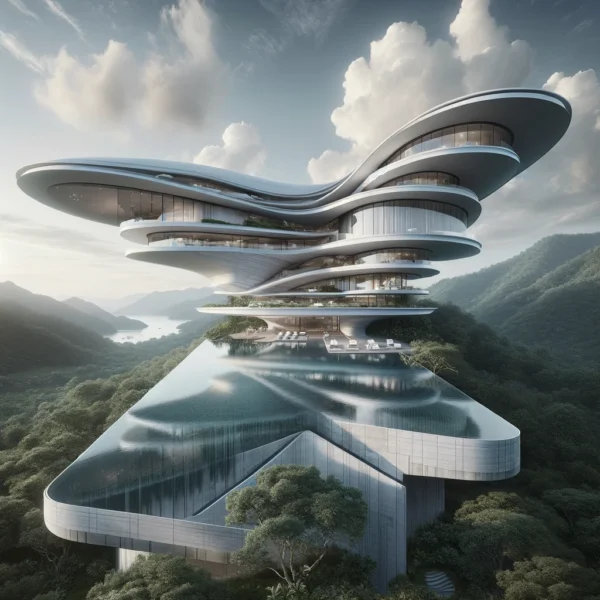
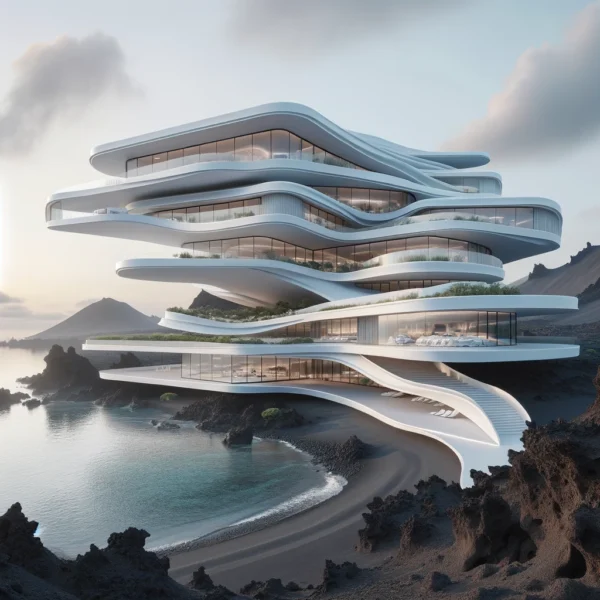
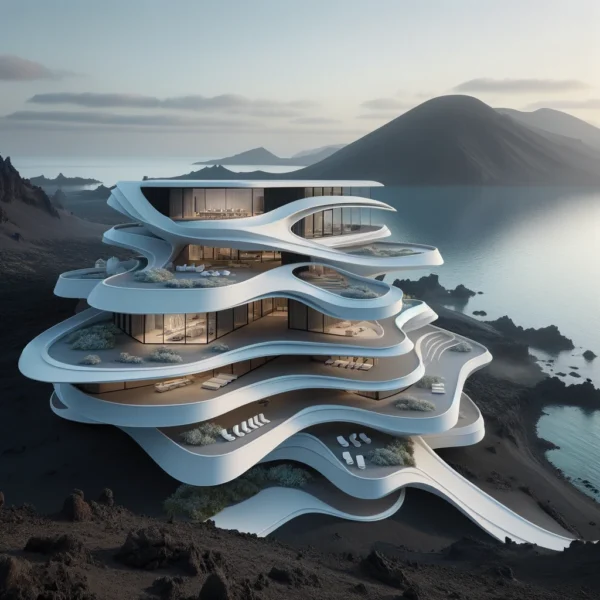
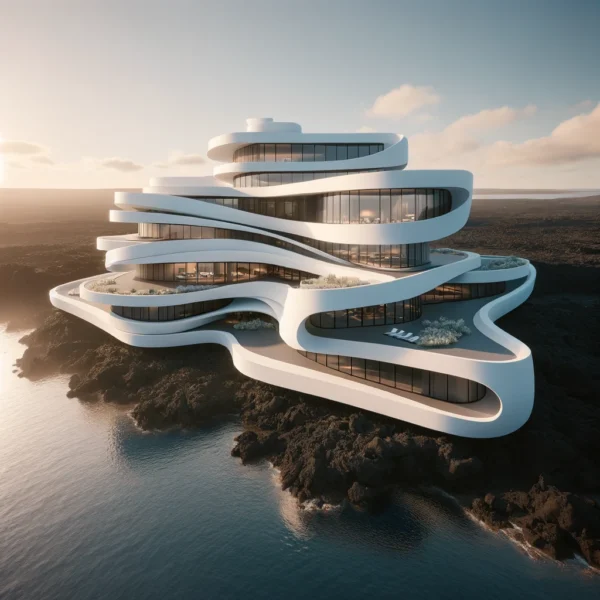
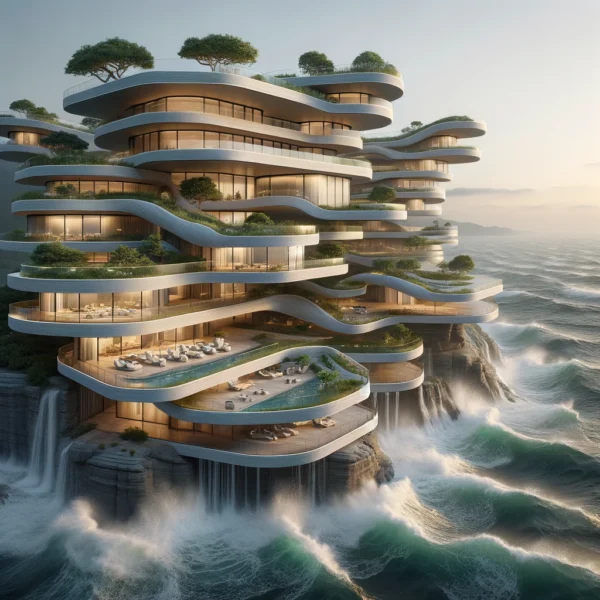
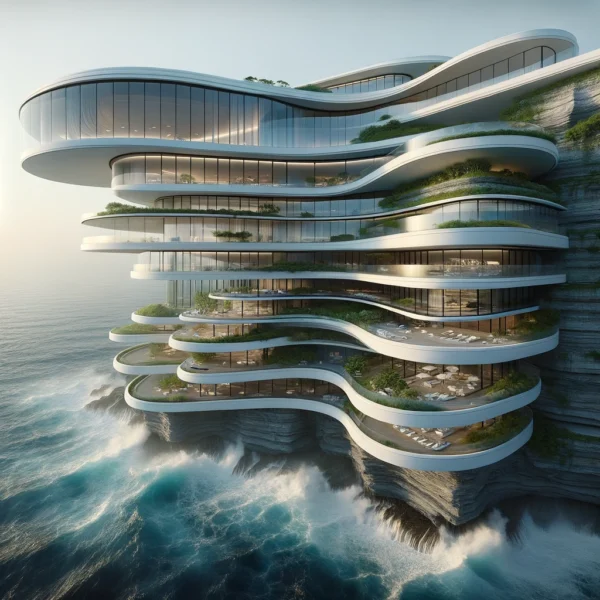
Develop resorts, sanctuaries, desert retreats, floating destinations, alpine observatories, or orbital hospitality visions with greater atmosphere and experiential depth.
High-end residential futures
Shape visionary villas, towers, compounds, and hybrid domestic environments with stronger emotional direction, material identity, and architectural coherence.
Cinematic environment development
Create future spaces for films, campaigns, visual narratives, and worldbuilding projects where architecture carries mood, scale, symbolism, and memory.
Future urban district ideation
Explore regenerative districts, climate-adaptive neighborhoods, civic prototypes, infrastructure futures, or post-carbon urban environments with stronger systems awareness.
Presentation-led concept packaging
Strengthen the way speculative ideas are framed for reviews, decks, presentations, and design storytelling by making them more articulate and more professionally composed.
Image-generation prompt creation
Develop stronger prompts for atmospheric renders, editorial perspectives, competition-style visuals, immersive interiors, or worldbuilding scenes with richer visual guidance.
Critique and concept refinement
Use the system to stress-test a concept, expose weak links, sharpen priorities, and elevate the final direction without flattening its ambition.
Research-adjacent future design exploration
Support future-oriented thinking that is bold and imaginative while still remaining clear about where speculation begins and verified knowledge ends.

























Reviews
There are no reviews yet.